


Six-way camera shootout: Smartphone roulette
Introduction
Camera shootouts are a proud GSMArena tradition and the latest edition features by far the most technologically advanced cameraphones yet. We have large sensors, sky-high resolution, optical image stabilization, clever image processing and a selection of cool tricks all in pocketable packages with flagship-grade hardware and software.
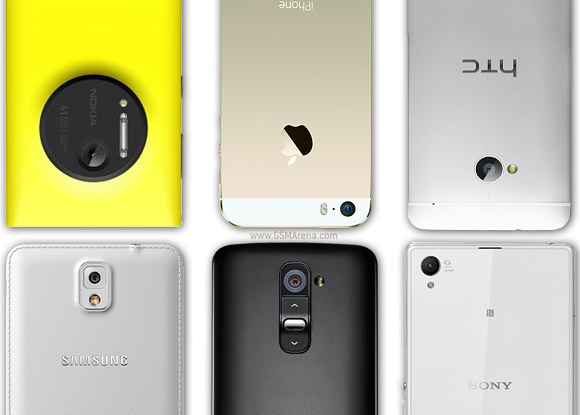
Six top notch phones, three smart platforms, and a total just shy of a hundred million pixels, prepare to meet the contenders.
Obviously, this shootout just has to include the Nokia Lumia 1020 - it took over from the 808 PureView as the most advanced cameraphone with a camera, inheriting all the benefits of the other PureView phones so far (the PureView 808 and the Lumia 920). The 1/1.5" optically stabilized sensor with the whopping 41MP of resolution is one of its kind and the xenon flash is equally rare these days.
Sony is also aiming high without crossing any lines in terms of practicality. The Japanese went ahead and put the largest sensor that would fit in an 8.5mm slim phone, and the result is quite impressive: a 1/2.3" 20.7MP imager, which may not have optical image stabilization, but it sure doesn't have a bulge on the back either. We had to get a second Z1 unit for this shootout as the first one had some issues with its lens but now the promising cameraphone can show its full potential.
Then there are the other Android hopefuls, which stick to the well proven Sony-made 13MP sensors. The LG G2 spices things up with optical stabilization plus 1080p video capture @ 60fps. The Samsung Galaxy Note 3 trumps that with 2160p video capture as well as 1080p @ 60fps, but it skips the OIS.
The updated Apple iPhone 5s camera is in the ring too - it has a larger sensor and brighter optics compared to the last generation, but the droids seem leaps and bounds ahead on paper. But that's not what we are after here - it's the real life performance that matters and the iPhones have managed to deliver more than their specs sheets suggest.
Finally, the HTC One is the oldest phone we're putting to the test but it's the first Android to include OIS and its different approach is certainly interesting to compare. Using fewer but large pixels (dubbed UltraPixels) goes against the grain, and we are interested to see how it works out.
Obviously we'll be testing the still photo and video recording prowess of all six phones, in both good and bad lighting scenarios. We're also including some of the commonly used features like HDR and panorama, and even pitting Nokia's video zoom against Samsung's take on the feature. This one is shaping as a one intense competition.
Still camera hardware and features
Camera features fall into two categories - hardware and software features. The hardware obviously creates the base of what can be achieved (e.g. great low-light shooting thanks to brighter optics or shake-free photos with optical image stabilization), with the software building on that by allowing better control of the camera or using the robust chipset to create fun effects.
| Galaxy Note 3 | LG G2 | Xperia Z1 | Lumia 1020 | iPhone 5s | HTC One | |
| Resolution | 13MP | 13MP | 20.7MP | 5MP / 38MP | 8MP | 4MP |
| Aperture | f/2.2 | f/2.4 | f/2.0 | f/2.2 | f/2.2 | f/2.0 |
| Sensor size | 1/3" | 1/3" | 1/2.3" | 1/1.5" | 1/3" | 1/3" |
| Flash | LED | LED | LED | LED, xenon | "True Tone" dual-LED | LED |
| Stabilization | Digital | Optical | Digital | Optical | Digital, video only | Optical |
| Shutter key | Volume rocker + voice | Voice | Yes | Yes | Volume rocker | Volume rocker |
| Controls | - | - | - | Manual | AE/AF lock | AE/AF lock |
| HDR | Yes | Yes | Yes (8MP only) | No | Yes | Yes |
| Panorama | Yes + spherical | Yes + spherical | Yes | Yes | Yes, HDR | Yes |
| Other | Dual shot, Animated photo, Sound & shot, Drama shot, object removal | Dual shot, Time catch, object removal | AR effect, Info eye, Timeshift burst | 4x lossless digital zoom, mechanical shutter, EV bracketing, Cinemagraph, object removal, Action shot | Unlimited Burst mode | Zoe, Action shot, object removal, Sequence shot |
Let's go over the hardware first, as that's the most important part by some distance. The Nokia Lumia 1020 obviously leads the charge here - it's the one area where this phone is miles ahead of the competition.
It has a massive sensor to begin with - a little over 50% bigger in terms of surface area compared to the closest competitor (Xperia Z1) and has double the resolution. The Xperia is almost an exception like the Lumia 1020 itself, the norm is 1/3" sensors - a quarter the surface area of the 1020 sensor - and anywhere between 3x and 10x fewer pixels.
It also has a fairly wide aperture - f/2.2 - which is impressive considering the sensor size. The Xperia Z1 and HTC One have f/2.0 lenses, though that is in part thanks to the smaller sensors. The only camera here that has a slower than f/2.2 aperture is on the LG G2 with f/2.4.


